With more businesses moving towards electric vehicles, one of the most common questions we’re asked is:
How much does it cost to install a commercial EV charger?
How Much Does a Commercial EV Charger Installation Cost?
The short answer is that there isn’t a single price, because commercial installations vary far more than domestic ones. This guide explains typical costs, what affects the price, and what’s involved, using a recent 22kW EV charger installation we completed for SEDA Aerospace as a real example.
What is a commercial EV charger?
A commercial EV charger is typically higher powered than a home unit and designed for workplace or fleet use. The most common options are:
- 7.4kW chargers (single phase)
- 22kW chargers (three phase)
A 22kW charger allows significantly faster charging but requires a three-phase electrical supply and additional considerations around protection and infrastructure.
Typical cost of a commercial EV charger installation
As a general guide, commercial EV charger installations usually fall within the following ranges:
- 7.4kW commercial charger: £1,200 – £2,000 + VAT
- 22kW commercial charger: £2,000 – £4,000 + VAT
These figures include installation but not always additional upgrades that may be required to existing electrical systems.
What affects the cost?
1. Charger size and type
A 22kW charger costs more than a 7.4kW unit due to:
- Higher power demand
- Larger cabling
- Additional protection requirements
2. Electrical supply
Three-phase supplies are essential for 22kW chargers. If a site only has single phase, upgrading the supply can significantly increase costs and requires the local DNO.
3. Distance from the distribution board
Long cable runs increase material and labour costs, especially when armoured cabling is required.
4. Protection and compliance
Commercial chargers often require:
- Local points of isolation
- Surge protection devices (SPDs)
- Correct earthing arrangements
These are critical not just for safety, but for maintaining manufacturer warranties.
5. Groundworks and external routing
External installations often require:
- Steel wire armoured (SWA) cabling
- Mechanical protection
- Neat surface routing or containment
Real example: 22kW EV charger for SEDA Aerospace
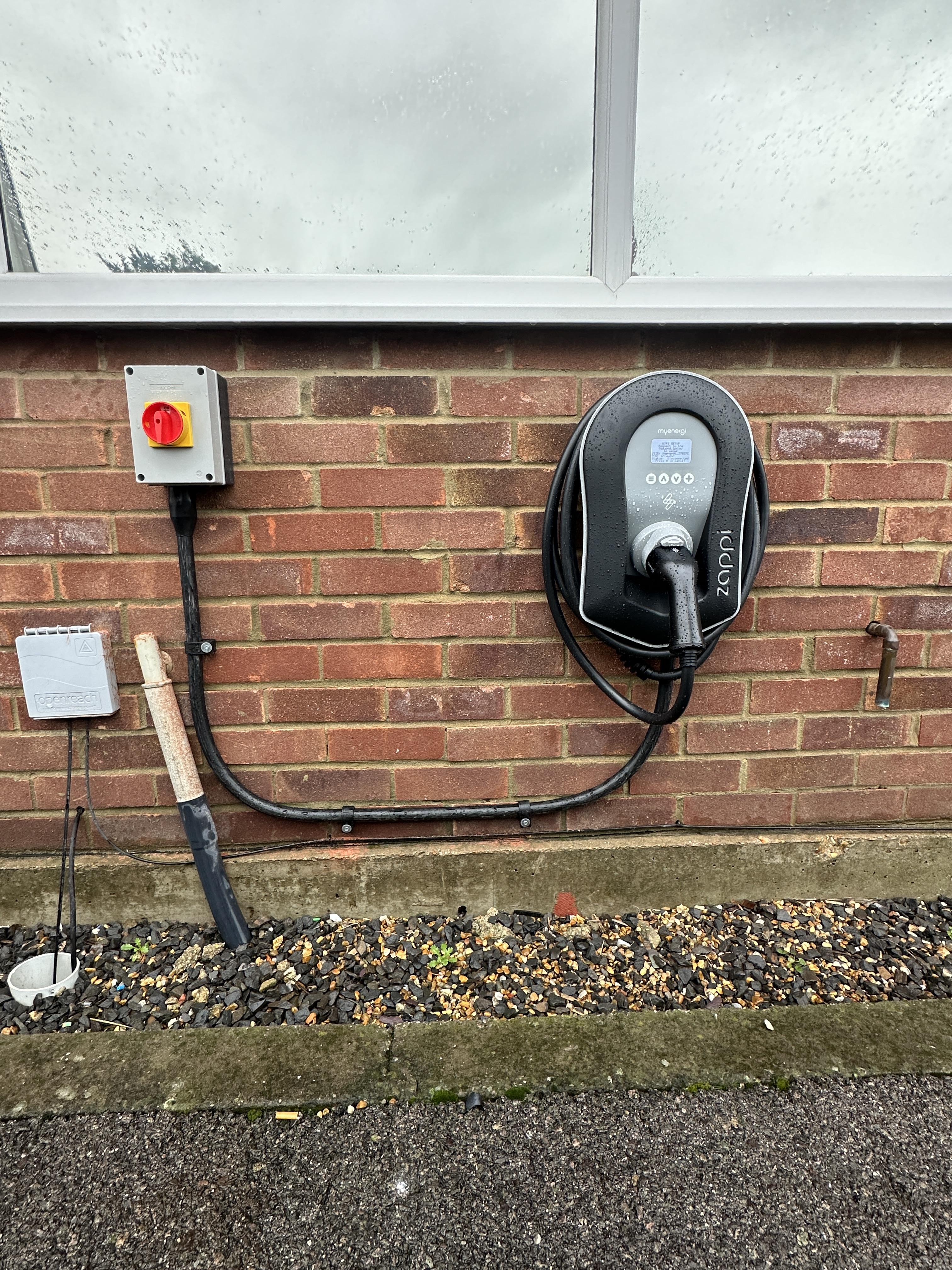
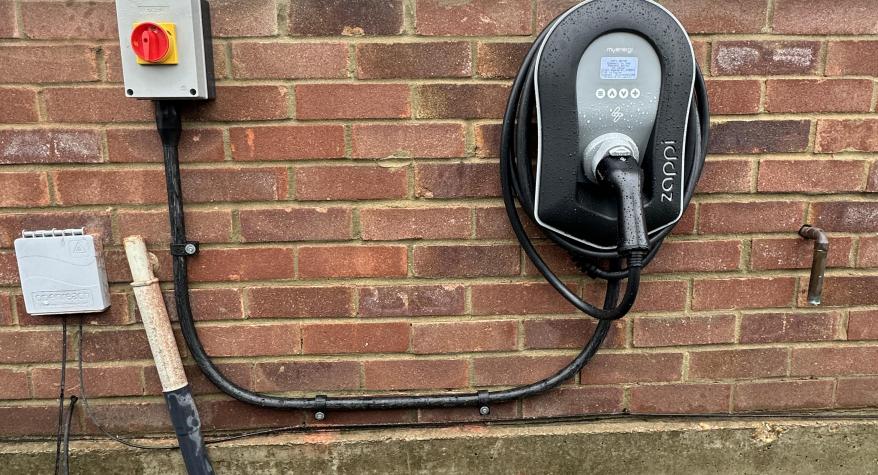
For this installation, SEDA Aerospace required a 22kW EV charger suitable for commercial use.
The charger was mounted externally and installed with the following considerations:
Local point of isolation
A clearly labelled local isolator was installed adjacent to the charger. This allows safe isolation for maintenance or emergency situations and is a standard requirement on commercial sites.
Mechanical protection
Steel wire armoured (SWA) cable was used and neatly clipped directly to the building. This provides robust mechanical protection and is essential in commercial environments where cables may be exposed to impact or damage.
Surge protection retrofit
The existing main distribution board did not have surge protection. To maintain the charger manufacturer’s warranty and comply with current standards, a surge protective device (SPD) was retrofitted to the main distribution board.
This is an important detail that is often overlooked. Without adequate surge protection, manufacturers may refuse warranty claims if the charger is damaged by voltage spikes.
Why surge protection matters for EV chargers
Modern EV chargers contain sensitive electronics. Power surges caused by switching events or lightning strikes can damage these components.
Installing an SPD:
- Protects the charger
- Protects the wider electrical installation
- Maintains manufacturer warranty
- Reduces future repair costs
In many cases, the cost of fitting an SPD is small compared to the cost of replacing a failed charger.
Cheap install vs correct install
Lower-priced quotes sometimes omit:
- Local isolators
- Surge protection
- Correct earthing checks
- Mechanical protection
While this may reduce the upfront cost, it can lead to:
- Voided warranties
- Safety concerns
- Expensive remedial work later
A proper commercial EV charger installation focuses on long-term reliability, compliance, and safety, not just getting power to the unit.
Is a commercial EV charger worth it?
For many businesses, yes. Benefits include:
- Supporting electric company vehicles
- Future-proofing the site
- Improved sustainability credentials
- Staff and visitor charging facilities
When installed correctly, a commercial charger is a long-term asset rather than a short-term expense.
Final thoughts
Commercial EV charger installations vary widely depending on site conditions and requirements. A site survey is always the best way to provide accurate pricing and ensure the installation meets both regulations and manufacturer requirements.
If you’re considering a commercial EV charger and want clear advice with no jargon, a qualified local electrician can assess your site and explain your options clearly.